
What Is Blister Packaging? A Guide for Pharmaceutical Buyers
Wednesday 19thAugust 2026 . Published by Central Pharma



If you are sourcing packing for a solid oral dose product for the first time, blister packing is probably the format you have been quoted for, and probably the one you have been given the least explanation about. Quotations arrive full of terms like forming film, lidding foil, pocket pitch and index length, with an assumption that you already know what they mean.
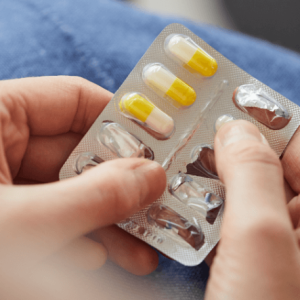
The blister packaging pharmaceutical companies use is, at its simplest, a sheet of pockets holding individual doses, sealed shut with a foil backing. Everything else is refinement: which plastic, which foil, how the patient gets the tablet out, and how much moisture the pack has to keep away from the product over a two or three year shelf life.
This article explains what a blister pack is, how it is made, and why the industry keeps choosing it over bottles and pots for most tablets and capsules. Material choices and compliance detail are covered in more depth elsewhere in this series.
What a blister pack actually is
A blister pack has two components in direct contact with the product.
The forming film is the front of the pack, the part with the pockets in it. It starts as a flat roll of thermoplastic, usually PVC or a laminate built on a PVC base, and is shaped into cavities on the packing line. Its job is to hold the dose, to be transparent enough for the patient and the inspection system to see the contents, and to provide a defined barrier against moisture and oxygen.
The lidding foil is the back of the pack. For most human medicines it is hard-temper aluminium, typically around 20 microns thick, coated on the inner face with a heat-seal lacquer and printed on the outer face. Aluminium is used because it is an absolute barrier: no moisture, no oxygen and no light passes through the foil itself, so the pack's real barrier performance is decided by the forming film and the quality of the seal.
An alternative construction uses aluminium for both faces. The pockets are cold-formed rather than heat-formed, which gives the highest barrier available in a blister but produces an opaque pack with a larger footprint. That format, usually called alu-alu or cold-form, is one of the main decisions a buyer makes early.
How the blister packing process works
A blister line is a continuous machine that carries out five operations in sequence. Understanding the order helps when you are reading a quotation or a site tour.
- Forming
The forming film is unwound and heated to a controlled temperature, softening it without degrading it. It is then pushed into a forming die by compressed air, by a plug, or by both together. The film cools in the die and holds the pocket shape. Cold-form aluminium skips the heating step entirely and is drawn mechanically into shape. - Filling
The formed web moves under a feeder that drops one dose into each pocket. Feeders range from simple gravity channels to universal feeders that handle awkward shapes, and the choice depends on tablet geometry, friability and speed. Empty pockets and double fills are the two classic defects, which is why fill verification sits immediately after this station.
3. Sealing
The lidding foil is brought down onto the filled web and passed between a heated sealing roller or platen and a counter surface. Heat, pressure and dwell time activate the lacquer and bond the foil to the flange of the forming film. Get this wrong and the pack either leaks or cannot be opened. Seal parameters are qualified for every material combination and monitored throughout the run.
4. Perforating, embossing and coding
The sealed web is then punched or scored: perforation lines between doses where the pack needs to be split, and embossing or laser coding for batch number and expiry date. Printed information, including the product name and strength repeated over each pocket, is normally applied to the foil before it reaches the line.
5. Cutting and Cartoning
Finally the web is cut into individual blister cards and fed, with the patient information leaflet, into a carton. From this point the process is secondary packing rather than primary filling: cartoning, labelling, anti-tamper devices, coding and case packing. Central Pharma runs both stages on its Bedford site, which removes the transport and reconciliation step that arises when the blisters and the cartons are done in different places.
Why blister packaging is the pharmaceutical default
Four reasons account for most of the industry's preference over bottles and pots.
Unit-dose integrity. Every dose sits in its own sealed pocket. Opening one dose does not expose the rest of the pack, so a moisture-sensitive tablet taken on day one is not degrading the tablet the patient takes on day twenty-eight. A bottle, by contrast, is compromised the first time the patient opens it.
Tamper evidence. A sealed blister cannot be opened and reclosed without visible damage. That evidence is inherent to the format rather than added to it, which is a meaningful advantage for products with diversion or falsification risk.
Controlled barrier performance. Barrier is specified rather than assumed. You choose a film with a known water vapour transmission rate, prove it in stability studies, and carry the result into your shelf life. If the product turns out to be more hygroscopic than expected, you can move up the material range without redesigning the pack.
Adherence and dose counting. A blister shows at a glance what has been taken. Doses can be printed with days of the week, packs can be built to a treatment cycle, and a pharmacist or carer can audit compliance without counting loose tablets. For long-term therapies this is a clinical argument, not just a convenience one.
Push-through or peelable
Most of the blister packaging pharmaceutical buyers specify is push-through: the patient presses the tablet against the foil until it ruptures. It is quick, it needs no dexterity beyond a thumb, and it suits the majority of adult populations.
Peelable and peel-push constructions use a laminated lidding foil that separates in layers, so the patient pulls a tab rather than pushing through. These are used where a child-resistant pack is required, and where the dose is fragile enough that pushing it through the foil would damage it. Child-resistant formats have to pass recognised test protocols with both children and older adults, since a pack that defeats a four-year-old must still be openable by an eighty-year-old.
Key takeaways
- A blister pack is a formed plastic or aluminium film holding individual doses, sealed with a heat-seal lacquered aluminium lidding foil.
- The packing process runs in five stages: forming, filling, sealing, perforating and coding, then cutting and cartoning.
- Barrier performance is set by the forming film and the integrity of the seal, because aluminium lidding foil is already an absolute barrier.
- Blisters are chosen over bottles for unit-dose integrity, inherent tamper evidence, specifiable barrier and patient adherence.
- Push-through suits most products; peelable and peel-push constructions support child-resistant and fragile-dose requirements.
Talk to Central Pharma about blister packing
Central Pharma has been filling and packing for the pharmaceutical, medical device, cell and gene therapy and healthcare sectors since 2006. Blister packing sits alongside pot, liquid, pouch and sachet filling on our 267,000 sq ft Bedford site, with secondary packing, serialisation, 100% AI inspection and QP release under the same roof, backed by an MHRA MIA and WDA(H) and three Qualified Persons who release product to more than 60 countries. If you are scoping a blister project and want practical input on format, materials and line feasibility before you commit, get in touch.
To stay informed on our latest thinking and technology developments, follow us on LinkedIn.
Contact Us Today View all news